Islamist influencers have recently had a particularly easy time getting their message across to young people in Germany, according to experts from the Association for the Prevention of Islamism and the Promotion of Democracy (KN:IX connect).
KN:IX connect seeks to prevent young people from drifting into Islamist circles, and to help those who want to leave them.
Global crises such as the Middle East conflict have acted as a catalyst, said Jamuna Oehlmann, managing director of the Federal Working Group on Religiously Motivated Extremism. However, she adds that "how these crises are dealt with here" is also crucial.
Narrow discourse
In Germany, "the discourse has been different than in other countries," Oehlmann pointed out.
As a result, Muslims, and especially people with Palestinian roots who were directly affected by the Gaza war, often felt that their perspective was not being heard.
Islamist actors had skilfully exploited this, along with the way in which politics tends to talk about migration and Islamism in general terms, and used it for their own purposes. Some then lured in young people by claiming that only they understand them.
Complex subject
Teaching complex topics such as the Middle East conflict requires methodological knowledge and sufficient time, said Friederike Müller, who has experience in violence and Islamism prevention programmes in the state of North Rhine-Westphalia.
Many people of Palestinian origin in the Ruhr region have been criminalized for participating in demonstrations and labelled as alleged anti-Semites, even though they only wanted to express their grief and their desire for an end to the Gaza war, she asserted.
"The fact that their distress and emotions are not given any space" is worrying, Müller added.
The experts were also critical of what they see as a particularly restrictive approach to the topic in Berlin schools.
Salafist preachers no longer as relevant
Salafist preachers such as Pierre Vogel and Abul Baraa have recently lost reach on social media, reported Elena Jung, an expert on extremism prevention, particularly in the digital space.
On TikTok, younger Islamist influencers are now more popular, focusing more on formats that work well on this platform, she said.
Federal Interior Minister Alexander Dobrindt banned the Islamist association Muslim Interaktiv, which was previously very active in the digital space, at the beginning of the month.
LATEST POSTS
- 1
 December’s full moon is the last supermoon of the year. Here’s what to know
 - 2Shooting of MIT professor Nuno Loureiro has police searching for a suspect
- 3‘We are the alternative’: Anti-Hamas Gaza militia tells BBC group is receiving international support
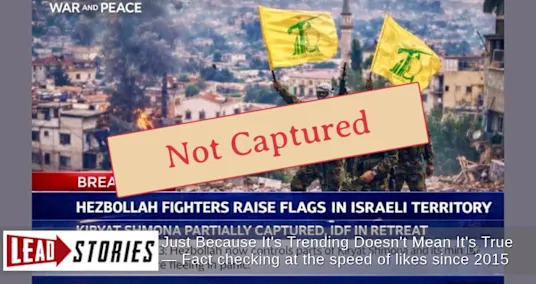
- 4Fact Check: Israeli Channel 13, Al Jazeera Did NOT Confirm Hezbollah Captured All Or Part Of Kiryat Shmona
- 5Here's what the Artemis 2 astronauts will be doing on each day of NASA's historic moon mission



- UN mission says no evidence Hezbollah rearming in southern Lebanon
- Avoid Slam: Exploring the Pickup Truck Transformation
- Gaza receiving over 70,000 cubic meters of water per day, COGAT claims
- German Cabinet advances bill to cut greenhouse emissions from fuels
- Vote in favor of your Number one Kind of Shades
- Research highlights potential dangers of ultra-processed foods for women under 50 regarding precancerous polyps
- I thought I knew the night sky, but what I saw from the Canary Islands left me speechless
- Amplifying Cash The executives: The Upsides and downsides of Various Ledgers
- Gauging the Upsides and downsides of Visas: A Complete Aide