When you buy through links on our articles, Future and its syndication partners may earn a commission.

NASA's SPHEREx observatory has completed its first map of the entire sky over Earth, and it is incredible.
Beyond its aesthetic value, the map and the rest of the data collected by SPHEREx, which launched in March this year, will help astronomers answer some of the biggest cosmic questions. Among these are: what happened during the first billionth of a trillionth of a trillionth of a second after the Big Bang, and how this has influenced the 3D distribution of hundreds of millions of galaxies in our universe?
Scientists will also use SPHEREx data to investigate the evolution of galaxies over the 13.8 billion-year history of the cosmos. This could include determining how the key elements needed for life were disbursed.

"It's incredible how much information SPHEREx has collected in just six months — information that will be especially valuable when used alongside our other missions’ data to better understand our universe," Shawn Domagal-Goldman, director of the Astrophysics Division at NASA Headquarters in Washington, said in a statement. "We essentially have 102 new maps of the entire sky, each one in a different wavelength and containing unique information about the objects it sees.
"I think every astronomer is going to find something of value here, as NASA's missions enable the world to answer fundamental questions about how the universe got its start, and how it changed to eventually create a home for us in it."

SPHEREx, which stands for the "Spectro-Photometer for the History of the Universe, Epoch of Reionization, and Ices Explorer," orbits Earth just under 15 times per day from the North Pole to the South Pole.
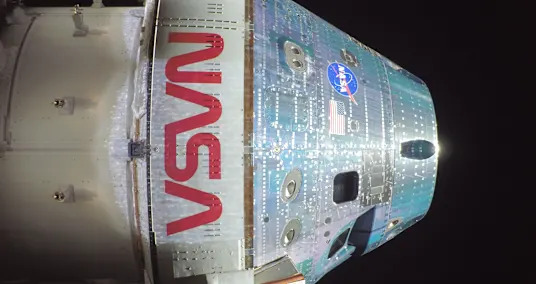
As it does, this conical spacecraft captures 3,600 images throughout each of its orbits, with the orbit of Earth around the sun shifting the space observatory's field of view.
Beginning operations in May, it took SPHEREx until this month to complete its first map of the entire sky over our planet. During its primary mission lasting two years, the spacecraft is expected to complete another three all-sky scans. This data will be merged with the existing map to create an even more detailed picture of the sky over Earth.
"SPHEREx is a mid-sized astrophysics mission delivering big science," JPL Director Dave Gallagher said. "It's a phenomenal example of how we turn bold ideas into reality, and in doing so, unlock enormous potential for discovery."
LATEST POSTS
- 1
 The most effective method to Succeed in Your Web based Advertising Degree: Procedures for Progress
 - 2Honda’s Biggest Flex Isn’t Its Superbikes, It’s Selling 500K Bikes In One Month
- 3Ghassan Al-Duhaini to replace Abu Shabab as Popular Forces leader in Gaza
- 4Steven Spielberg's 'Disclosure Day' trailer drops: What we know about the alien movie
- 5When will the Epstein files be released — and will they reveal anything new?




- Tasting America: An Excursion Through Darling Cheap Food Brands
- Artemis II live updates: NASA's moon mission breaks Apollo record for farthest distance humans have traveled from Earth
- 5 Different ways Macintosh is Prepared to Overwhelm Gaming, Even Against Windows
- How a Middle East War Becomes a Retail Price Hike
- Barry Manilow reveals lung cancer diagnosis and plans to undergo surgery: 'It's pure luck' it was 'found so early'
- What we know about the 'Stranger Things' spinoff — plus the one cast member who guessed it correctly
- Ukrainian man arrested in Germany on suspicion of spying for Russia
- Astronomers detect black hole blasting winds at incredible speeds
- The World's Dazzling Regular Miracles